COVID-19 has shaped the future of air travel, and extra precautions are helping us get back to the skies. In this post-pandemic world, the travel industry is prioritising health and safety more than ever.
Airports and airlines have introduced a slew of new measures to make air travel safer for their staff and travellers. Here’s what you can expect.
What to expect at the airport
1. Arrive earlier than you would during pre-pandemic times
We’re all getting back into the swing of travel and as a result, we need more time to move through the airport. Staff shortages, an uptick in document checks and travellers navigating through airport procedures means it’s taking a little longer to get from check-in counter to boarding gate.
Arrive at the airport at least two to three hours before departure for domestic flights and three to four hours early for international flights. Having this extra bit of time will give you more time to relax once you’re cleared through security.
2. Increased social distancing, health and document checks
Travel after COVID means returning to a different experience than the one we left behind in 2019. You may be subject to a temperature screening upon entry. You also may be required to present a COVID test result and/or proof of vaccination against COVID-19 in order to proceed through security. Once inside, airports are doing what they can to reduce the need for human-to-human contact, so queues will be socially distanced where possible, and seats in departure lounges may be taped off to ensure distancing between travellers.
3. Enhanced cleaning measures
There will be a more noticeable presence of cleaning staff throughout the airport deployed to regularly disinfect common areas. Hand sanitiser pumps will also likely be stationed at high traffic routes within the terminals.
4. More self-service options
Checking-in online and self-service kiosks were already on the rise in airports because they made transiting faster and more convenient. We don’t expect that to change anytime soon, especially as airports are pushing to minimise unnecessary contact with staff. In fact, you might find more self-service booths than you remember from before the pandemic.
What to expect on the plane
1. Face masks are here to stay (for now)
Passengers are generally required to wear face coverings for the duration of the flight, apart from when they’re eating or drinking. It’s important to wear a mask when flying as it significantly lowers the risk of catching and spreading COVID-19 at a time when you’ll often be in close proximity to other travellers. You may also be asked to remain seated for the duration of the flight except to use the bathrooms, which are regularly disinfected. Some airlines and airports forbid the use of cloth masks, so you’ll want to pack a medical mask.
2. Plane air filtration systems are really effective
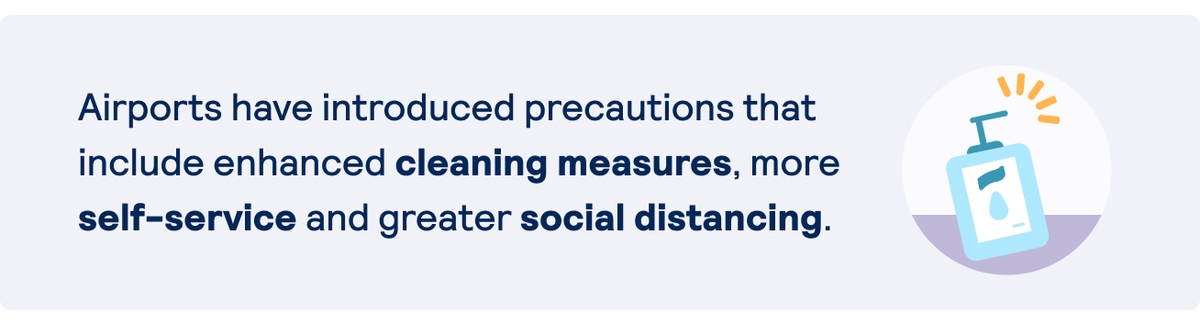
Most aeroplanes use HEPA air filtration systems, which are the same as those used in operating rooms. According to National Geographic, 40% of the cabin’s air is recycled through this system while 60% is taken from outside. They are extremely effective at removing airborne pathogens and make the air at 10,000m generally cleaner than you’d find indoors on the ground.
3. Food services may be reduced
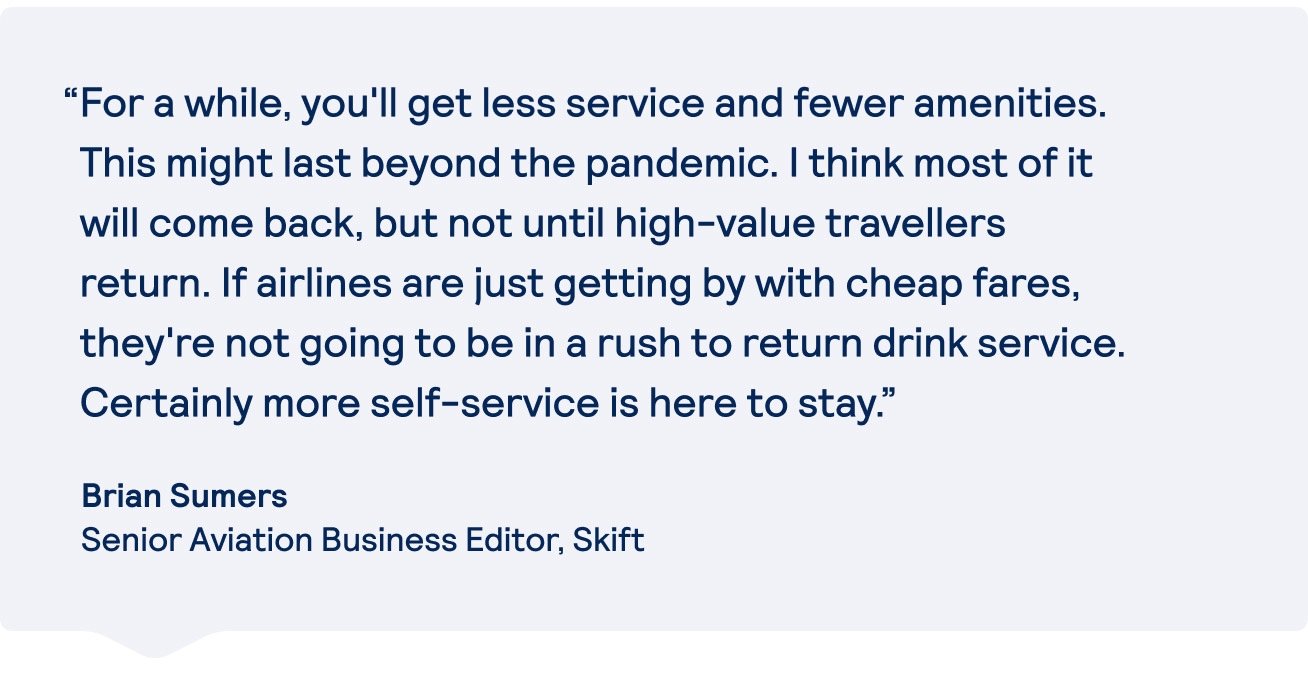
As air travel ramps up again, many airlines are gradually increasing their full food and beverage services during flights, though a return to full service may take a little longer.
What to expect in the future
1. Public health measures will remain in place
We ran a survey of more than 850 travellers from the US, UK and Australia asking them what they considered most important when choosing a flight since the emergence of COVID-19. “Passenger and crew well-being,” “health-screening processes,” “enhanced cabin-cleaning processes” and “air quality on the aircraft” came out on top.
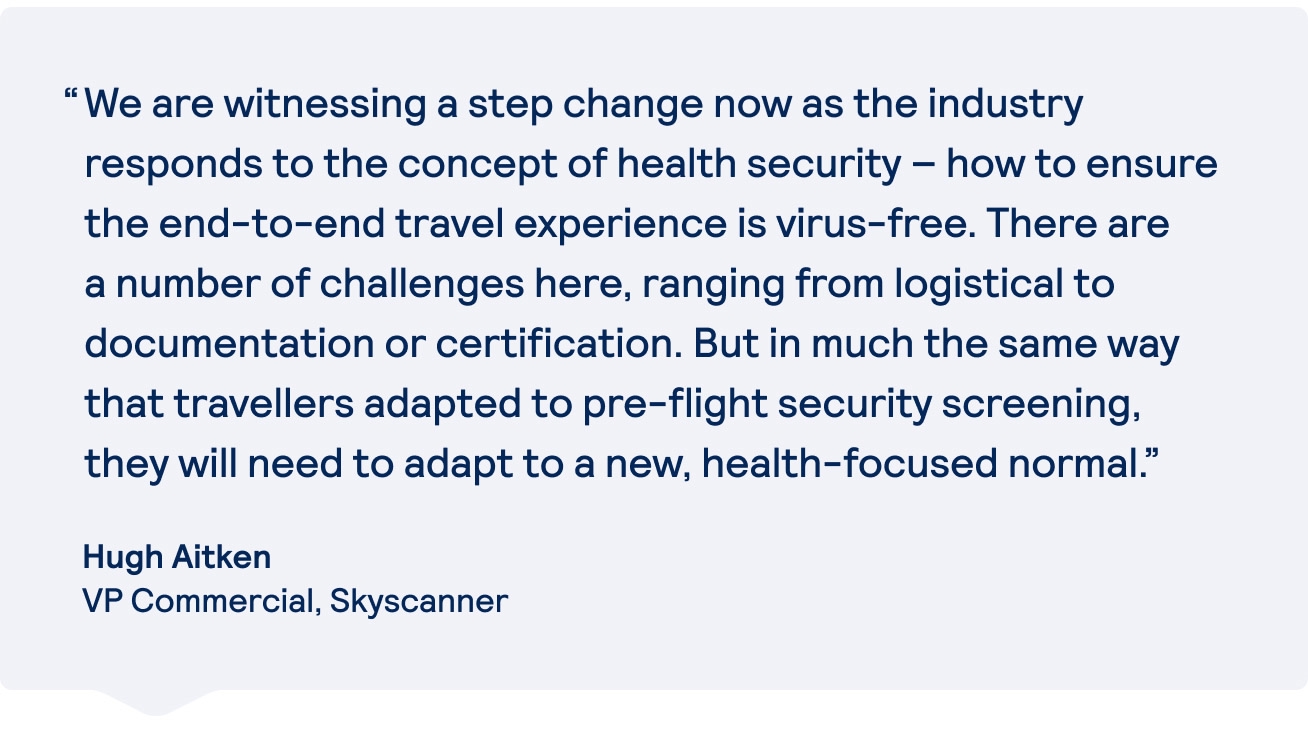
You’re not alone if you’re thinking about how to stay safe while travelling. The new normal will account for this new focus on health. The travel industry is not only listening, but they are also working hard to make sure we feel safe when we fly.
2. Technology will enhance current cleaning practices
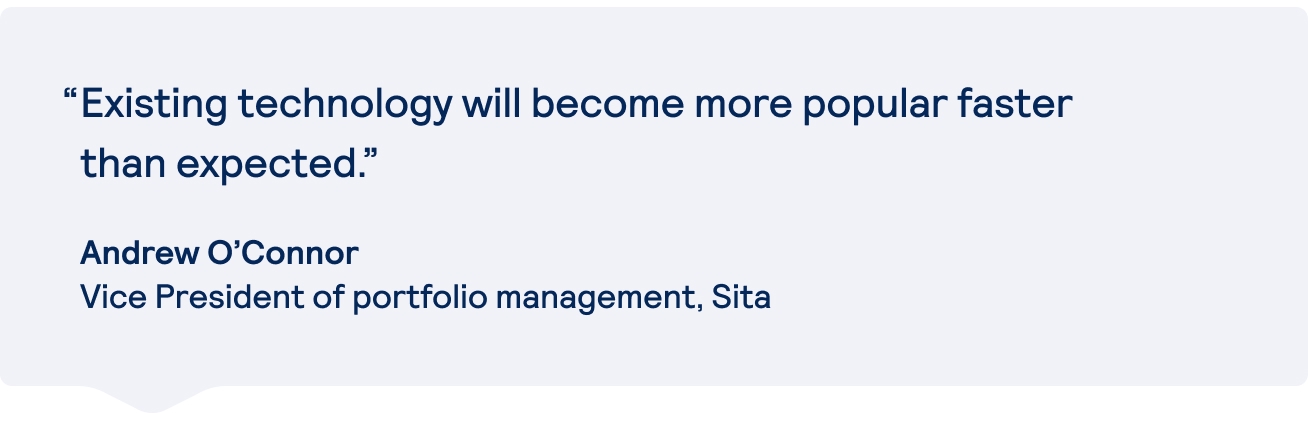
Some experts are speculating about what the future of air travel will look like, and how the industry can embrace some cutting-edge solutions. For example, disinfection tunnels that clean each traveller from head to toe have been tested in China. Baggage could undergo deep cleaning using a disinfectant fog or UV light which kills bacteria. Tokyo Airport has also trialled contactless personal mobility machines for passengers with disabilities.
Get ready for your next adventure
Want to read more?
- The most popular destinations and the latest travel rules
- Fit to Fly: COVID tests for travel explained
- COVID vaccine certificates for Australian travellers
- Travel on your terms with flexible flights
- Travel insurance for travel during COVID-19
- Quarantine in Australia explained
- What you need to know about cancelled flights
- Latest Travel News


