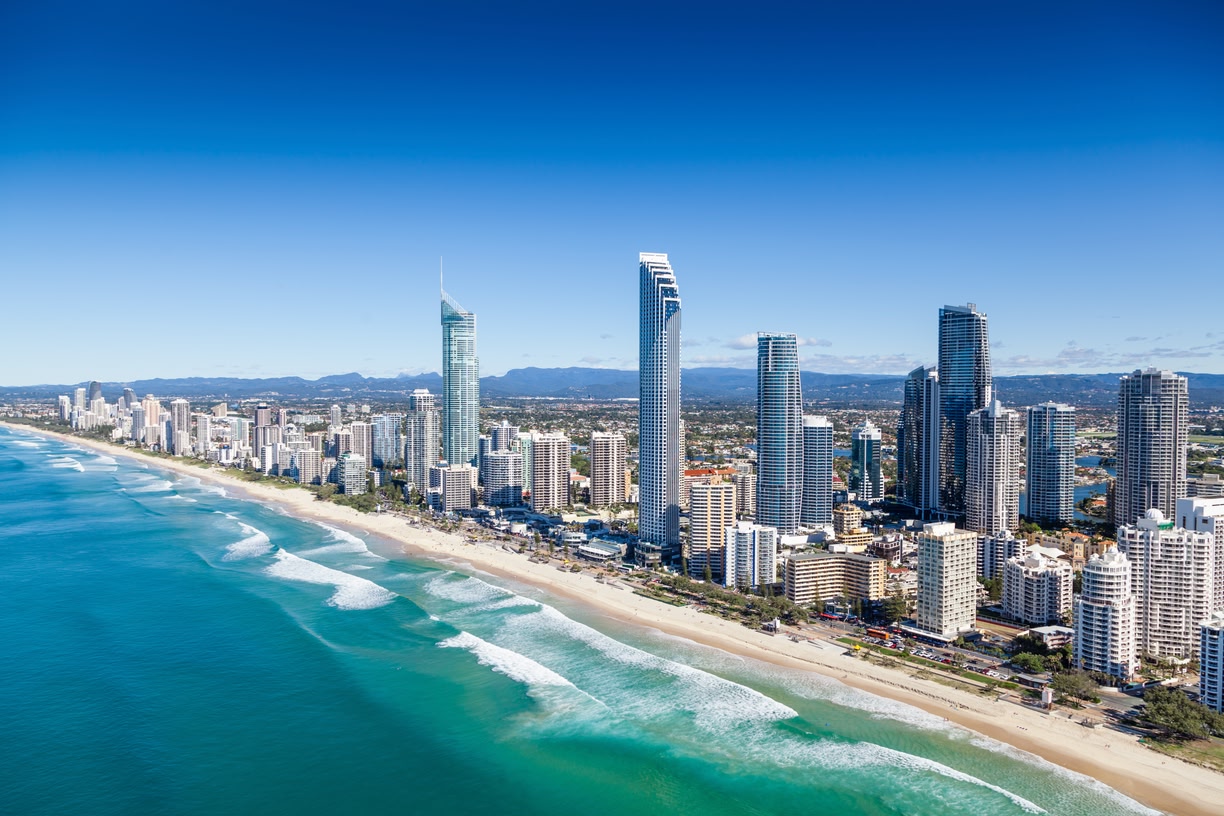
Come eye to eye with gentle giants as humpback whales cruise along the Queensland coastline. At Skyscanner, we’ll share everything you need to know about whale watching off the Gold Coast’s Humpback Highway.
Dive into our tips and tricks for a successful trip to the Gold Coast.
1. How to get to the Gold Coast
The Gold Coast is easily reached by plane, train, car or a combo of all three. Domestic and international flights arrive at Brisbane International Airport (BNE) or Gold Coast International Airport (OOL). Airlines like Qantas, Jetstar and Virgin Australia run regular flights from most major cities in Australia. Once you’re at the airport, public transport or your own set of wheels will get your to your accommodation and marinas.
| City | Average flight time | Average drive time |
| Perth | 4 hrs 20 min | 46 hrs |
| Adelaide | 2 hrs 30 min | 24 hrs |
| Darwin | 4 hrs 10 min | 37 hrs |
| Alice Springs | 3 hrs | 33 hrs |
| Melbourne | 2 hrs | 18 hrs |
| Sydney | 1 hr 30 mins | 9 hrs |
| Canberra | 1 hr 40 mins | 12 hrs |
| Cairns | 2 hrs | 20 hrs |
💡 Tip: The Airtrain connects both airports to hubs where you can take a taxi, catch a bus or drive to the marinas where whale watching trips depart.
2. The best time to visit Gold Coast for whale watching
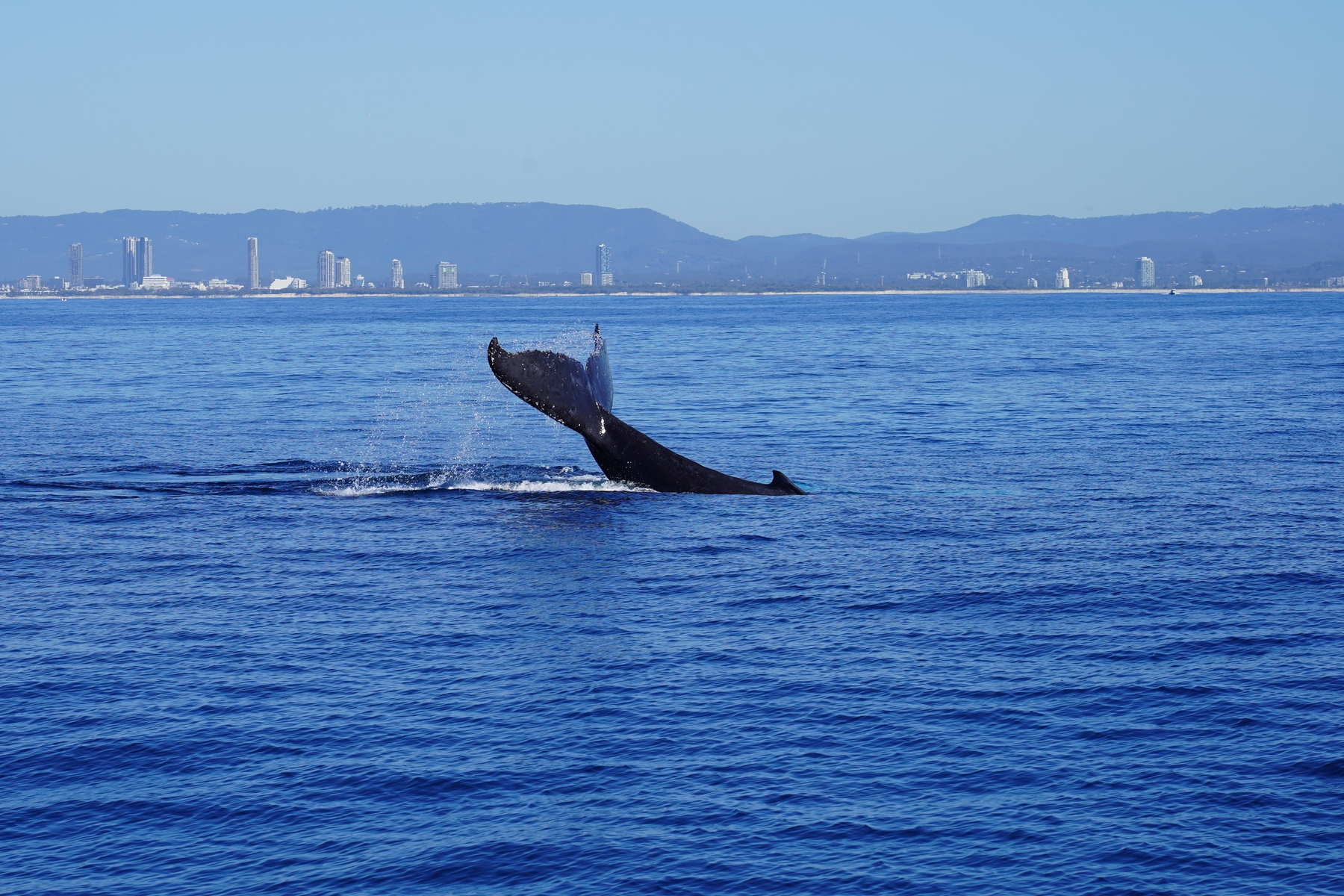
Whale watching season off the Gold Coast runs from June to early November. Each year, over 40,000 humpback whales embark on their 5,000+ kilometre cruise along the Humpback Highway, which spans all along the Queensland coastline and includes the dazzling Gold Coast. Humpback whales feed in the nutrient-dense waters of the Antarctic before venturing north to warmer, more romantic waters to mate and give birth.
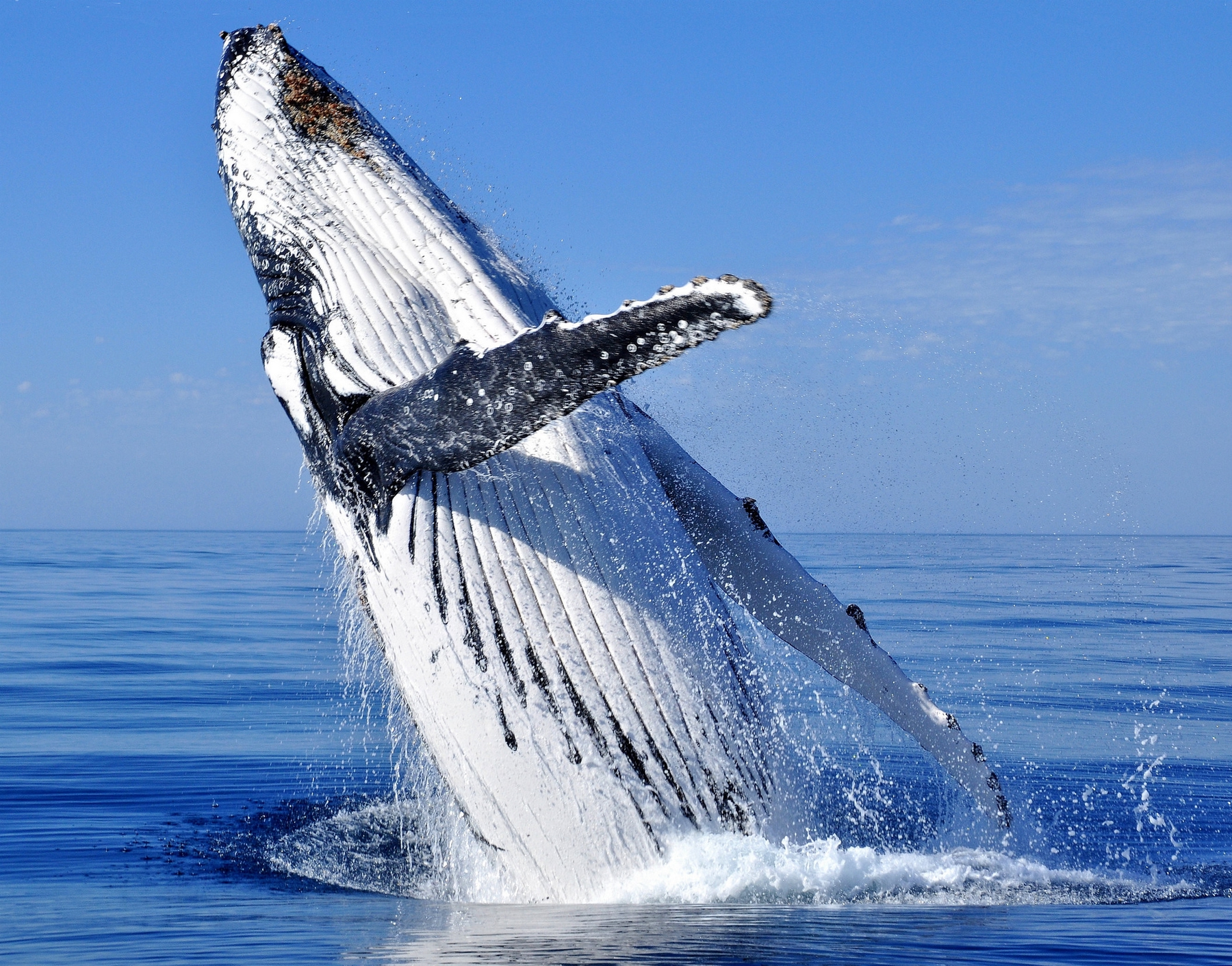
Pregnant whales usually lead the pack, followed by bull whales and strong juvenile whales. Trailing behind are newly weaned calves born with their mothers, weaker whales and elderly whales. By mid-August, the waters off Gold Coast are marked by whisps of white spray from all the breaching, fin slapping and spy-hopping (where whales poke an eye out of the water). All season long, whale watching cruises drop a microphone in the sea to listen for the melody of a bull whale’s haunting song.
💡 Tip: Most whale watching tours run rain or shine, but plan at least a few days for the activity just in case there’s inclement weather. Most tour companies offer a guarantee where your next trip is free if you strike out on sightings. Pencil your tours towards the beginning of your trip to reschedule for later if needed.
3. Tips for a successful trip
Pack a camera with a zoom lens or binoculars
If you’re lucky, a humpback whale might breach within a hundred metres of your whale watching boat. To take in all the whale action going on further away, pack a powerful set of peepers, like a zoom lens (100mm+) or pair of binoculars. Have your camera on and ready to shoot during the tour — whales only make an appearance for a few seconds at a time, so you’ll need to be fast to get a good picture.
Don’t forget your sea sickness tablets
Take a seasickness pill before your boat departs for the day. Sea sickness medication tends to work proactively, and you’ll want it for peace of mind if you’re prone to seasickness. Most cruises will sell pills onboard, but you’ll save a few bucks by bringing your own. Ginger chews and strong peppermint tend to help settle the stomach if you’re feeling only a hint of nausea.
Keep your head on a swivel
It’s natural instinct to rush to the front of the boat and stake out a space for yourself. Many other whale watchers will be thinking the same thing, and you’ll likely all be clustered at the bow. Look left, right and behind you to increase your chances of seeing a whale the others might’ve missed by simply looking ahead. Your best viewing point could be on the side of the boat, where nobody is crowding your periphery.
Search for whale clues like smooth slicks of water formed by whales as they descend into the blue. Clouds of mist mark where a whale’s come to take a breath.

4. Where to stay on the Gold Coast
From glitzy suites with sea views to cozy apartments tucked back from the beach, the Gold Coast has accommodation options to suit everyone.
💡 Tip: Humpback whales are often spotted from the beach! Opt for a seaside stay where you can peer over the horizon on an all-day whale watching retreat.
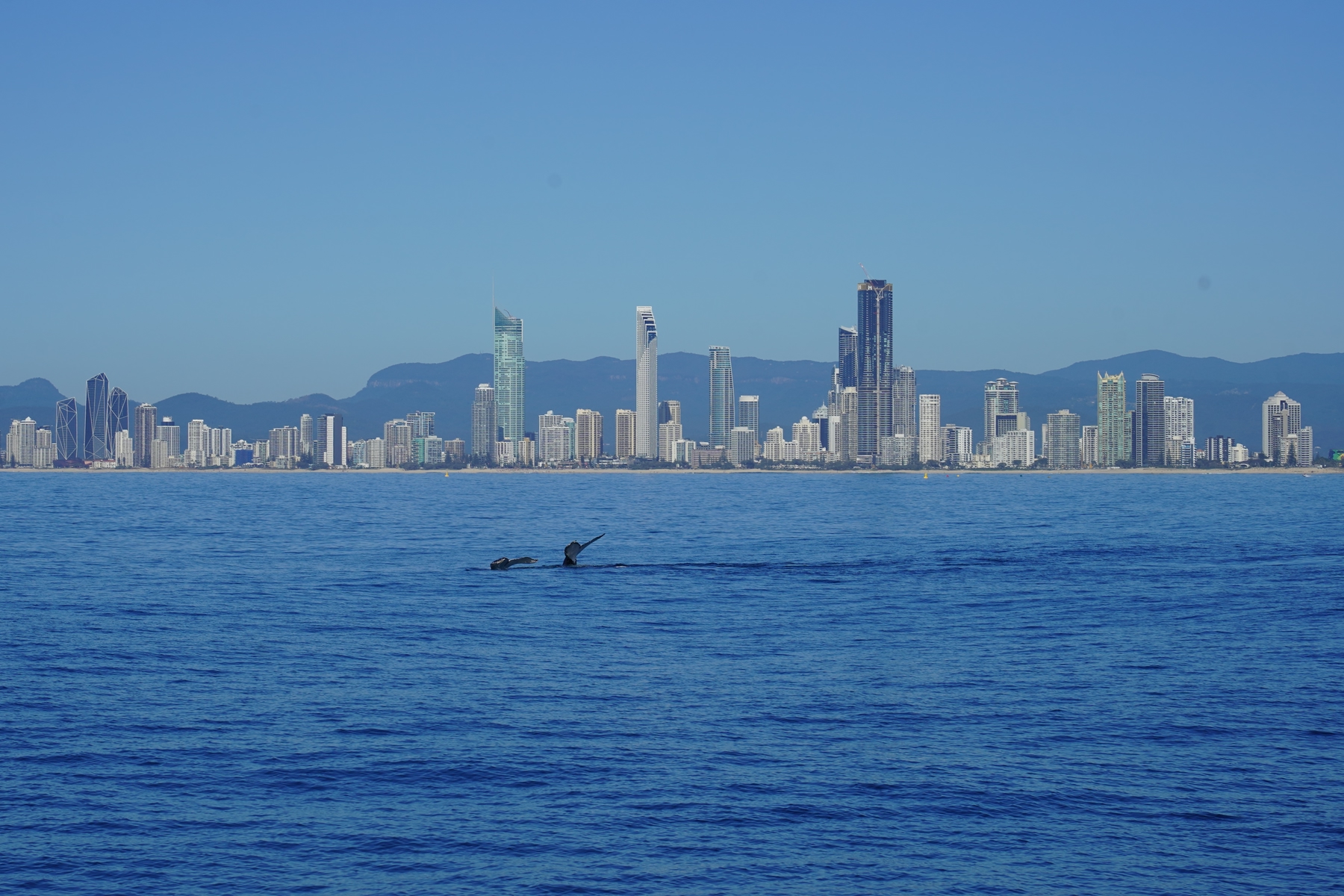
Ultiqa Air On Broadbeach: Give in to glamour at this luxurious apartment complex with floor-to-ceiling windows. Choose between one- to four-bedroom apartments equipped with a kitchen, lounge room and laundry facilities.
BreakFree Diamond Beach: The perfect spot for families–adults will love the BBQ area and spas while kids will enjoy the playground (and the two lagoon-style pools). Accommodations include one- to three-bedroom modern apartments, most come with a kitchen, lounge room and balcony.
Breakers North Absolute Beachfront Apartments: Each apartment has a full kitchen, laundry room, lounge room and access to the beach. A great pick for long stays and independent travellers.
Meriton Suites Surfers Paradise: With 75 floors, this hotel serves views all around with floor to ceiling windows in most rooms. Accommodations range from standard suites to three-bedroom apartments, all spacious decorated to create a beach holiday feel.
FAQs: Whale watching off the Gold Coast
The best time to visit the Gold Coast is from June to November for whale watching. The city clocks in over 300 days of sunshine per year, so there’s never truly a bad time to travel here. Come during the shoulder months of March, April, October or November to beat the crowds. For the best chance of spotting whales, visit from July to September.
Humpback whales are the most common whales off the Gold Coast, though there have also been sightings of southern right whales, fin whales, minke whales, sperm whales and blue whales. Orca whales don’t typically cruise along the Queensland coast.
You’ll spot humpback whales all day long on a whale watching tour off the Gold Coast. It could be worth checking the weather and swell forecast before you book. Calm seas and clear skies make for an ideal day out on the water.


