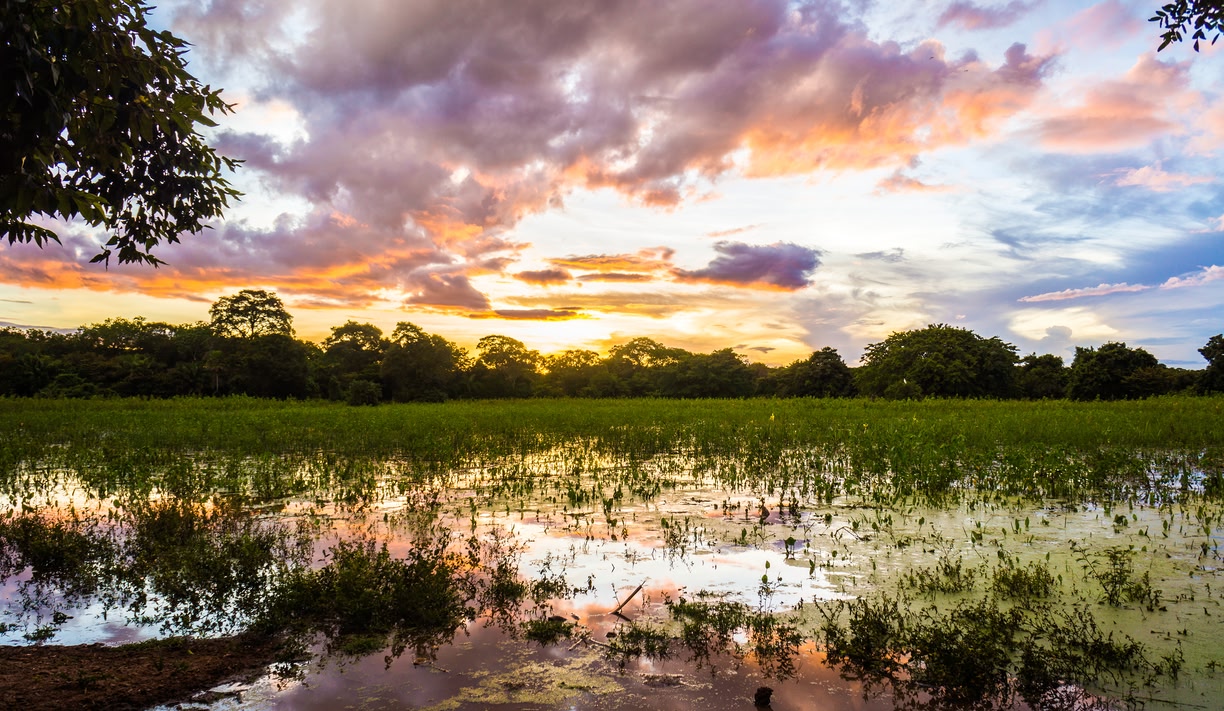
It’s not the usual thing to advertise a trip to the tropics in the summer, let alone recommend a visit to Kakadu National Park in the wet season. This is because things can get… well, rather damp. But avoiding a little rain (okay, a lot of rain) means that many of us explore the Red Centre when it’s at its busiest and most expensive.
Visiting Kakadu, Australia’s largest national park, during the wet season has become something of an urban legend. That’s a no-go area, if you will, saddled with stories about how inhospitable the terrain becomes. But this just isn’t true. We’ll concede that maybe around the 1900s, avoiding Kakadu was good advice when the rains came in, but nowadays, what you’ll discover is heavily discounted hotels, empty sealed roads, and a pristine landscape clamouring with colour and life.
We’re here to change your mind and to tell you why a visit to Kakadu in the wet season is the best time of year to see this epic slice of Australia.
Quick overview of Kakadu National Park
Kakadu National Park is the largest national park in Australia, tucked on the northern end of the Northern Territory. The closest city to Kakadu (and the best airport to fly into) is Darwin—which is about a two-hour drive away.
Kakadu National Park is split into two major seasons, the ‘dry season’ from May to October and the ‘wet season’ from November to April. Most travellers visit the park during the dry season. Come during the wet season, and you’ll experience the park in a way that few other travellers have.
Reasons why you need to visit Kakadu in the wet season
We’re biased because we love Kakadu and believe every Australian should visit every corner of this incredible place. However, it’s important to check local and national restrictions before you travel, as state-to-state rules may differ.
Be sure to check official government advice before you book a trip to Kakadu National Park:
- Northern Territory Government: For information on entry into the state and up-to-date restrictions.
- Australian Department of Health: For the latest health advice and information on inter-state travel.
Water equals waterfalls
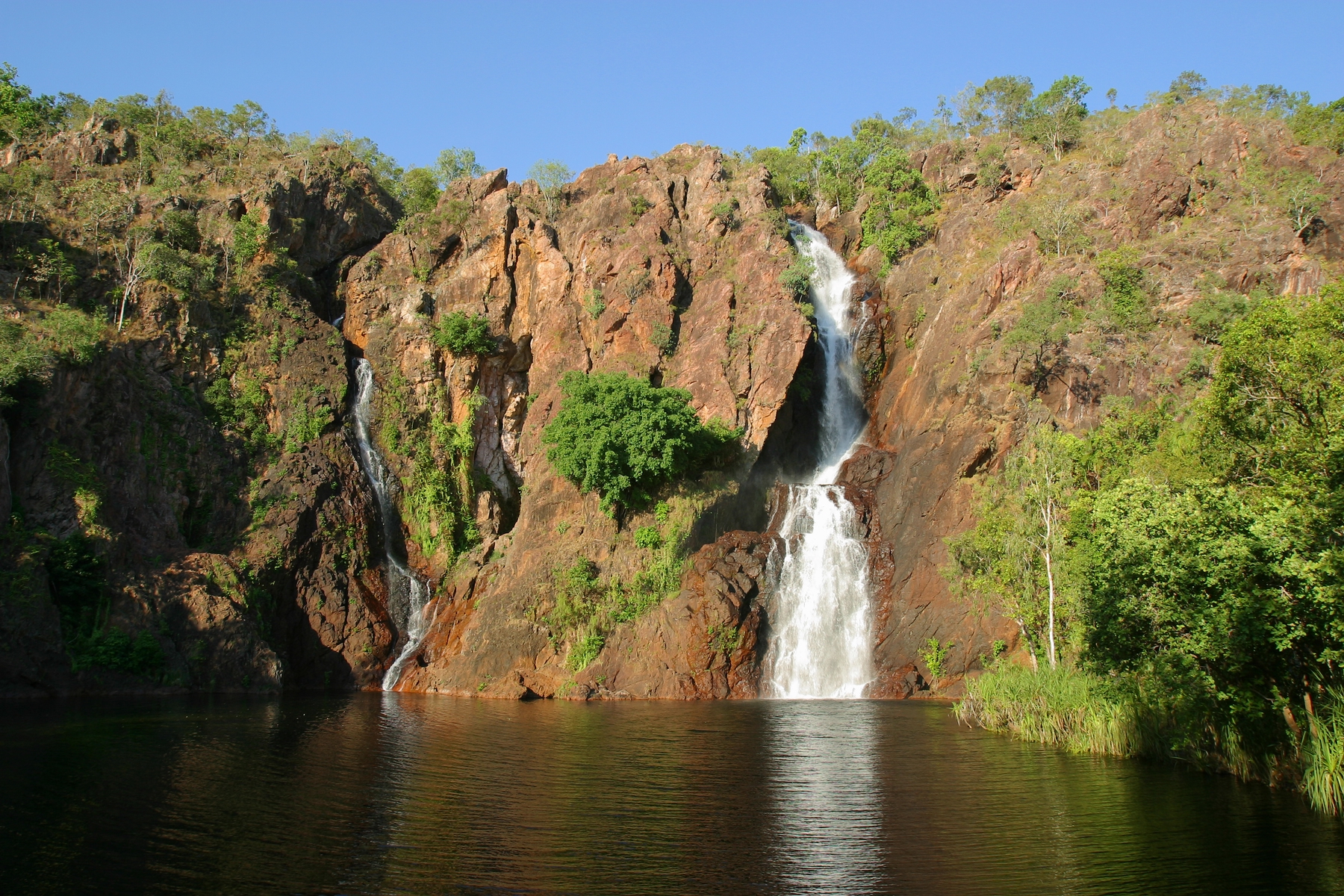
In the wet season, Kakadu shakes off the dust and welcomes back its spectacular waterfalls. In the dry season, you’ll still see the plunge pools where the waterfalls meet their end, but it’s only in the wet season you see them at their finest, especially as many of Kakadu’s falls are solely fed by rain.
Twin Falls is a particular highlight, but there are plenty of waterways that will capture your imagination here, such as Jim Jim and Gunlom.
Everything is green
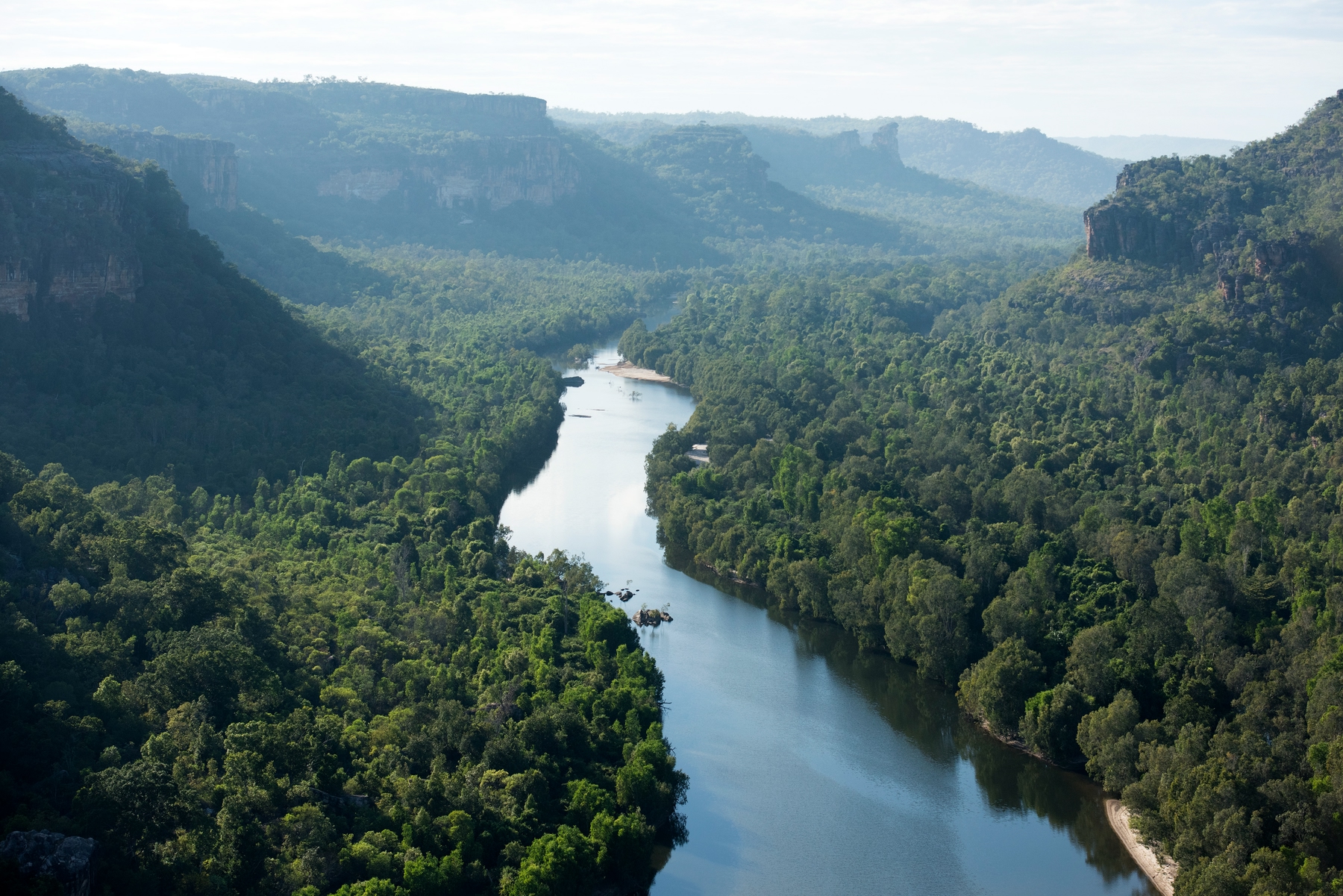
Red Centre, Shmed Centre. Over the Christmas holidays, while we’re clamouring for the beaches, Kakadu is undergoing a full transformation into an Eden-like paradise. Flowers spring up in a riot of colour, tall grasses emerge, and the trees bud with leaves once more.
One of the best ways to appreciate the dramatic change is with a scenic flight, where you can see the singular glory of Kakadu bathed in shades of green.
It’s not that wet

Okay, okay, it is that wet, but what we mean is: it doesn’t rain constantly. There is a misapprehension that you’ll have to suffer grey stormy skies for days on end. The wet season typically means you’ll likely experience at least one downpour a day, but there is plenty of sunshine to go around, especially in the mornings.
In fact, if you’re into photography, this is the best time of year to visit, not only for the wildlife (more on that later) but because after a downpour, you’re usually treated to a rainbow or two, and a landscape sparkling with dew drops the size of fat diamonds.
You’ll see plenty of wildlife
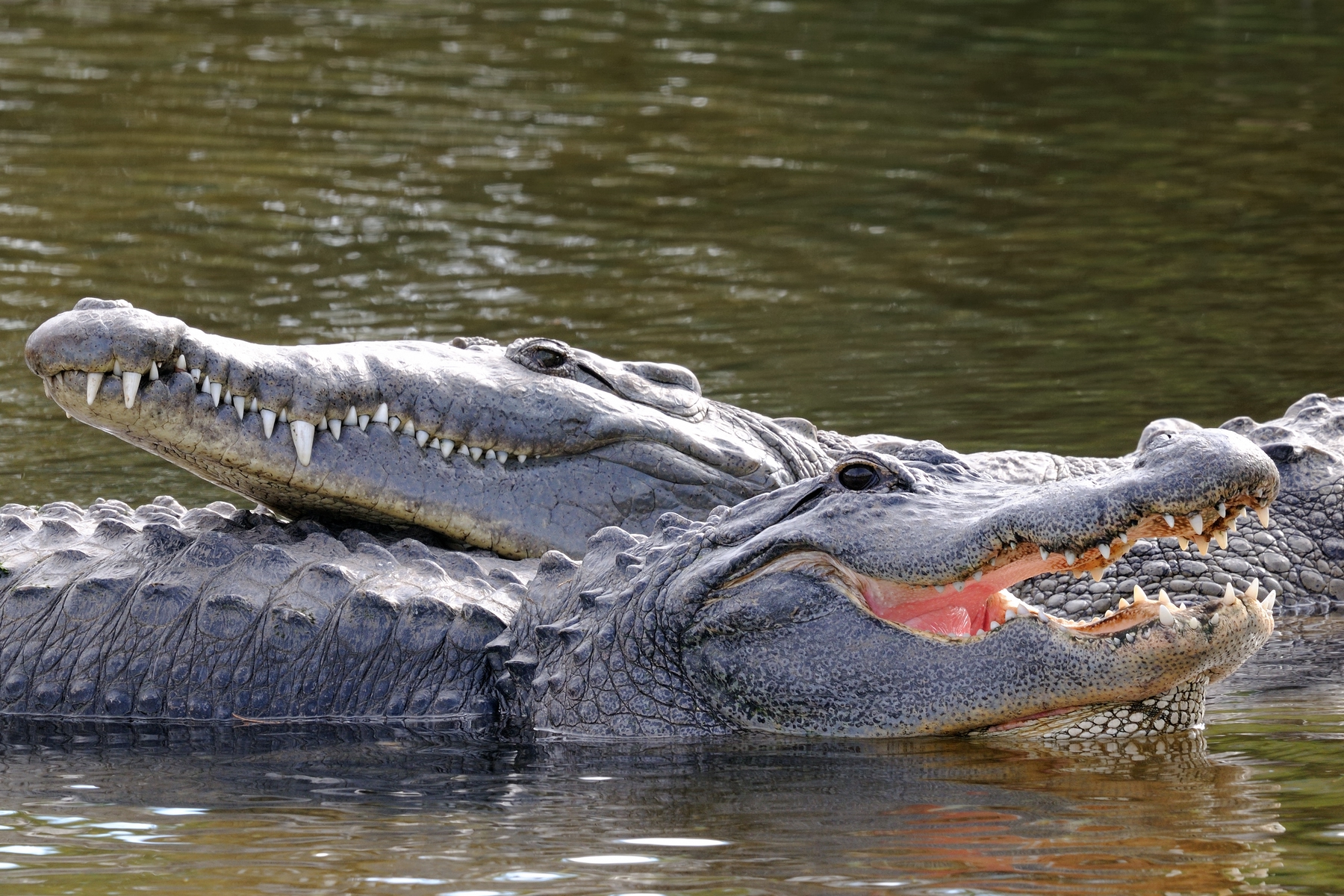
Kakadu became famous not only for its extraordinary terrain but for its access to our indigenous wildlife in their natural habitats. You won’t see animals congregate in concentrated areas as much, such as around drying waterholes, but you will see them spread throughout the park.
In fact, you’d be hard-pressed not to sight any of Kakadu’s wildlife since it is home to a staggering 30% of both Australia’s birdlife and its bats. You’ll also be in with a chance of spotting dugongs, crocs, and turtles in its waterways. Whilst on terra firma, you’ll need to keep your eyes peeled for the dingo, bandicoots, and rock wallabies.
You’re in with a chance to win a million bucks!

Well, you’re in with a chance if you’re any good at fishing. When the rains start to fall, NT kicks its barramundi season into high gear by holding an annual Million Dollar Fish competition.
This is where 101 fish are tagged with numbers aligned to cash prizes. If you catch one of these tagged beauties, you can win anything from $5000 to a cool mil.
It’s affordable

Kakadu is no stranger to people in the dry season, and that’s when you’ll find popular sites packed and nearby hotels with hiked prices.
In the wet season, not only are you less likely to be jostling for elbow room at Kakadu’s most famous natural attractions, but you’ll also find the hotel prices are a lot more affordable—even if you don’t find that million-dollar fish.
Rock art comes alive
Kakadu’s incredible rock art reveals how humans have interacted with this national park for over 20,000 years. All throughout the park, you can admire paintings from Bininj/Mungguy that depict animals, stories of creation, and initial contact with Europeans. These images act as a record of the past, with many local artists continuing the work of their ancestors today. When looking at each piece, it’s hard not to be amazed at how they’ve stood the thousands of cycles of growth and erosion each monsoon season brings.
Bonus: The boat tours are amazing
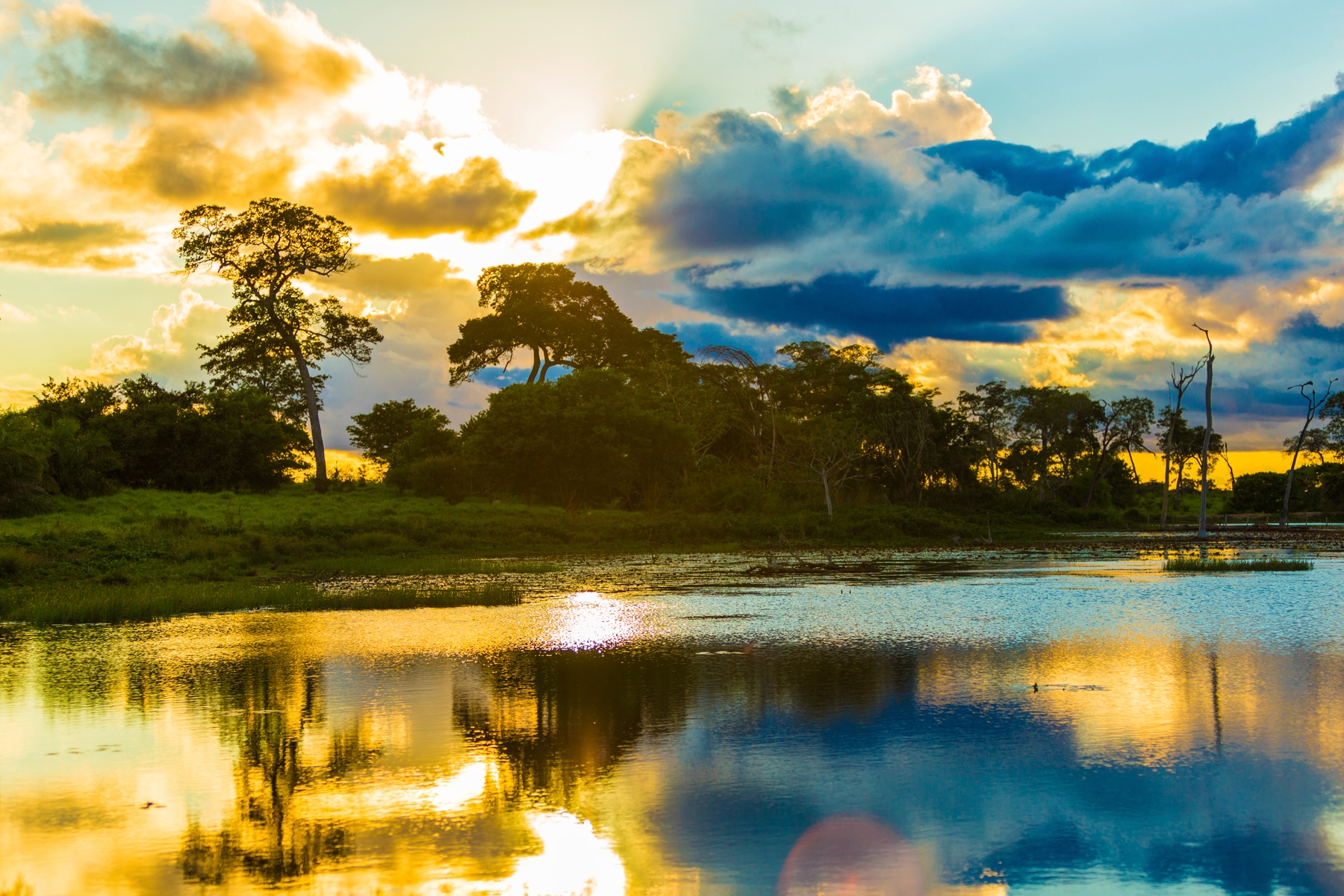
Look, not to be Captain Obvious, but when the rains fall, the rivers swell, and when the rivers swell, the boat tours are going to be memorable.
Hopping aboard a boat and seeing Kakadu from its waterways is a phenomenal way to take in the sights of this revered national park.
We especially recommend Yellow Water Cruises, which is Indigenous-owned, and a great introduction to the ecosystems and landscape of this national treasure.
Planning a visit to Kakadu in the wet season? These are common questions travellers have about the park
The wet season in Kakadu runs from November to April, but the wettest months are January to March when the monsoons typically fall.
In the peak of the wet season, you can usually expect clear blue skies in the morning and rising humidity and thunderstorms in the afternoons. Temperatures hover between 25 and 35 degrees at this time of year.
Many people choose to stay in nearby Darwin, but there are plenty of resorts and lodges in the park if you want to stay closer. There are also campsites and caravan parks for travellers who really want to experience the Outback at night.
Kakadu is great for families, but you’ll have to keep in mind some attractions or sites may have more difficult access points, especially if you are travelling with young children. The Bowali Visitor Centre is a great place to pick up tips and information on family-friendly attractions in the park.


