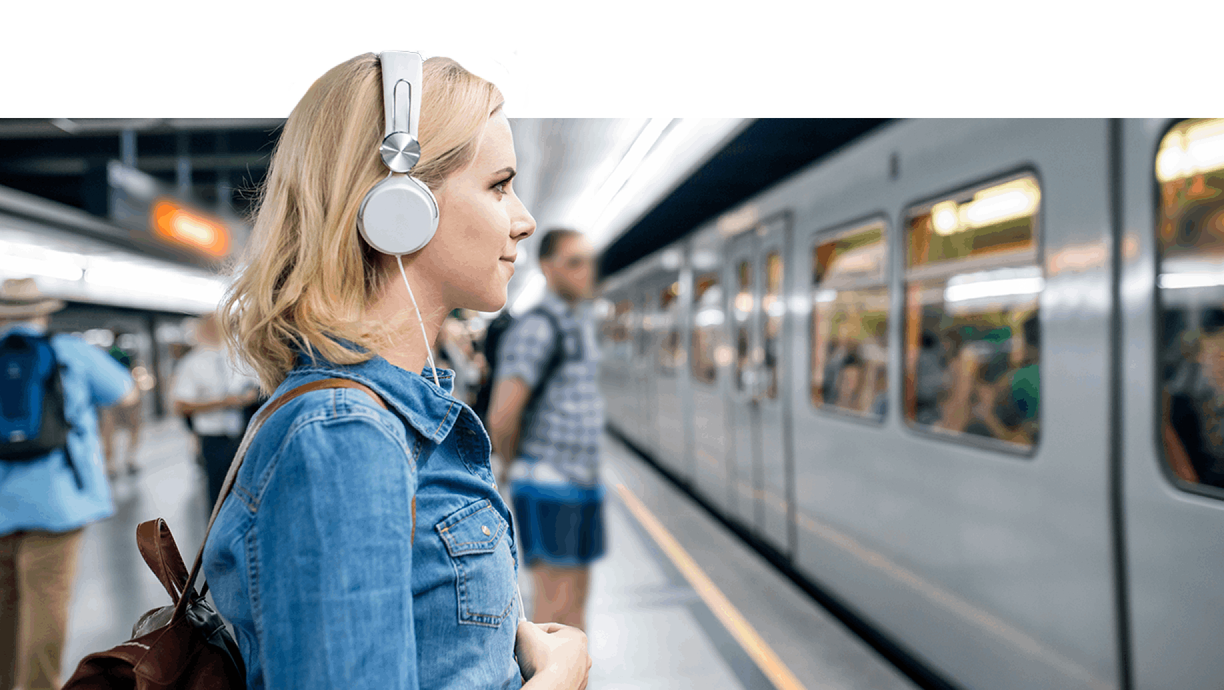
The subway. Buses. Taxis and bikes. Seoul is a city that’s set up for exploring and it’s super simple to navigate on public transport.
The subway. Buses. Taxis and bikes. Seoul is a city that’s set up for exploring and it’s super simple to navigate on public transport. Armed with your T-money card you’ll soon see Seoul just like a local. In our Seoul transport guide, we’ll walk you through the Seoul Metro network, the colours of the buses, the right taxis to take, and a couple of road rules for cycling.
Let’s see Seoul.
T-money card
YOUR TRAVEL ESSENTIAL
Yes, you can pay for single journeys on Seoul’s buses and subways. But who wants to be fiddling with their card (or change) for every trip? The easiest way is to grab yourself a travel pass.
There are a few different options, but we recommend the T-money card. You can pick one up at convenience stores across the city for ₩2500 and charge them up with credit in increments of ₩5,000 or ₩10,000. You can even use your T-money card in taxis too. It’s just a case of scanning the card when you get on and off a bus, in and out of a taxi, or whenever you jump on the subway. You also get a ₩100 discount on fares for using your card rather than cash.
Refunds are available when you leave at the airport for the original price too. But with their K-Pop inspired designs, we won’t hold it against you if you keep it as a souvenir.
Insider tip:
You can use your T-money card at many of Seoul’s traditional markets too, including Sinwon Market, Gildong Market, Jeongneung Market, and many more. You’ll get a ₩1,000 discount on any purchases of at least ₩10,000 using your T-money card – but only if you do so within one hour of using your card on public transport

Public transport
1
Seoul Metro
SPEEDY, CLEAN AND SIMPLE
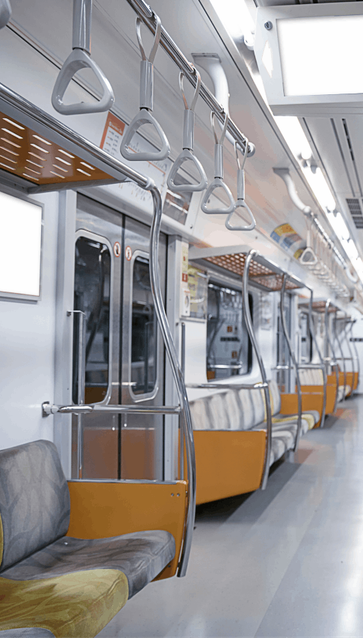
The Seoul Metro is all about fast and convenient travel across the city. There are 22 subway lines and 302 stops in the city. Yes, it sounds a lot but with a little technology you’ll have it sussed in no time.
Download the Seoul Metro app to your smartphone and you can plan your journey quickly and simply – there’s also free Wi-Fi on subway trains so you can keep track of your journey without using up your data. There are signs in English at each of the stations and stops are announced in English too, as well as Korean, Japanese and Chinese. Every stop also has information in English about the next train.
When you first enter the station, tap your T-money card at the turnstile and follow the signs to your line – they’ll be colour coded. If you need to change lines, just follow the colours. You won’t need to tap your T-money card when you transfer lines, just when you leave the station.
Before getting on the train, Koreans queue up in an orderly fashion and there are reserved seats for the elderly, people with disabilities, and pregnant passengers. Leave these free.
The metro runs from 5:30am until around midnight every day.
Insider tip:
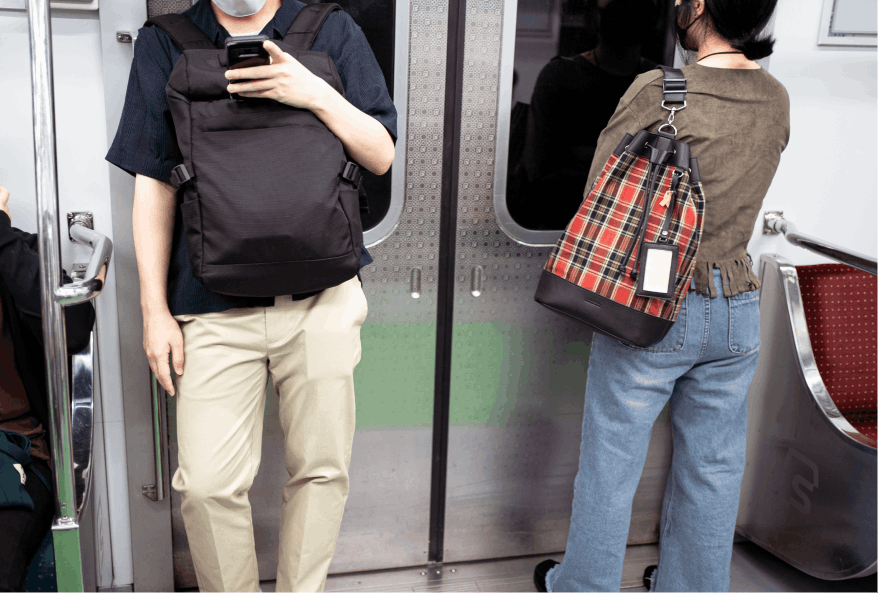
Try and avoid travelling at peak commuter times – 7-9am and 6-7pm on weekdays. Koreans call it ‘Joik-cheol’ which translates to ‘Hell Train’ when it’s packed with commuters. Don’t ride the Hell Train.
2
Buses and tour buses
GET TO KNOW THE COLOURS
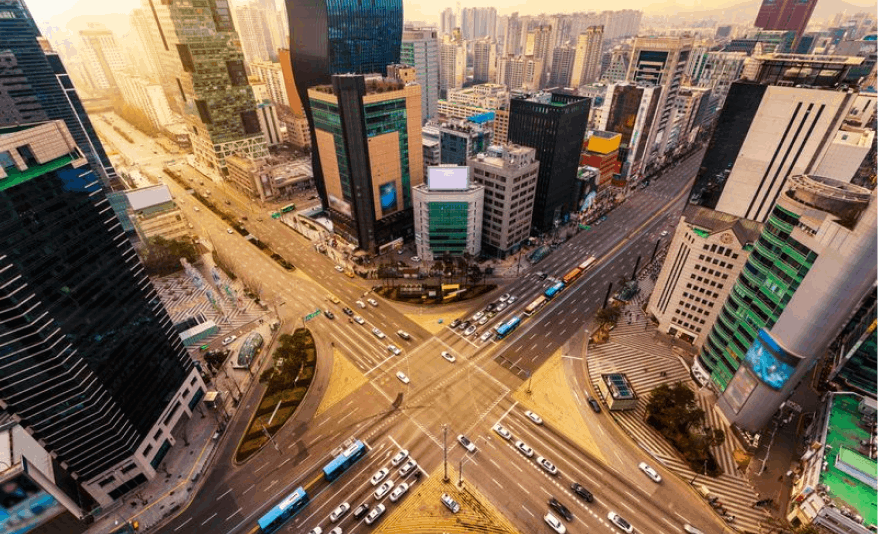
As with everything in this city, the bus network is extensive and efficient. It’s easy to use too. Each bus is colour coded:
- Green (mainline) and blue (branch) buses are the main types of bus covering cross-town routes. Blue buses run at slightly faster speeds and on longer journeys from more suburban areas to downtown. Green run at slower speeds for shorter journeys and connect major subway stations and bus terminals
- Smaller green buses (around half the size of regular green buses) – called maeul – are local buses that travel on shorter routes in residential areas.
- Red (rapid) buses travel on express routes and connect the metropolitan area with downtown Seoul.
- Yellow (circulation) buses operate in downtown Seoul and are ideal for tourists
You can pay in cash when you board the bus or use your T-money card for a ₩100 discount. Tap at the front door when you board the bus and back door when you exit. You also get up to four free transfers on either the bus or subway within 30 minutes of your first journey with a T-money card.
If you’re out partying, there are some night buses that run until the early hours – look out for the letter N before the number on the front.
To see the city on the bus with no stress at all, book a tour bus. You can hop on to see the major attractions in Seoul from the comfort of an open top bus. You’ll get an audio guide in English, free Wi-Fi, and various discounts across at sights and attractions across the city. It’s a great way to get your bearings early in your trip.

3
Public bikes
A LITTLE PEDDLE POWER
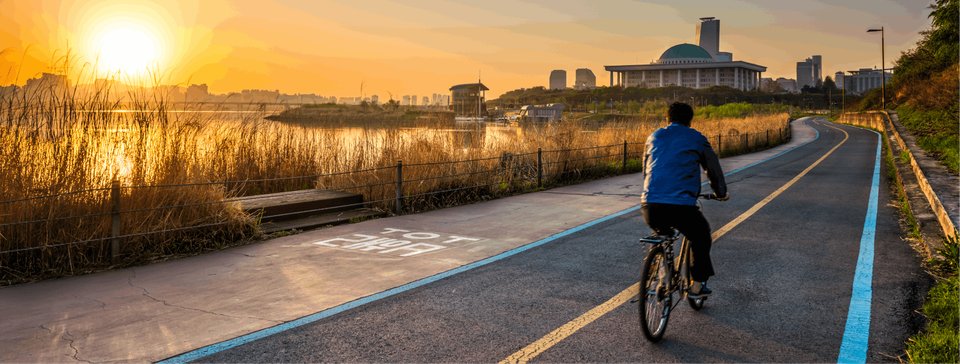
Jump on a bike with some peddle power for the best way to see Seoul up close. There are a few bike-share schemes in the city, but the best for tourists is Ttareungyi, the public bike system. You can’t miss the green and white bikes.
Insider tip:
A lot of roads don’t have dedicated cycle paths. You’ll be sharing the footpath with pedestrians not the road.
First create an account online and download the Seoul Bike app. You can then pay for hourly and daily passes – just pick up a bike at one station and return it to another when you’re done. Check out the dedicated cycling route along the Hangang River Cycling Trail for a slower paced slice of Seoul.
4
Taxis
IDEAL AFTER A NIGHT OUT
Taxis are surprisingly cheap in Seoul, and you can pay with your T-money card too. They’re ideal for travelling at night and are simple to hail on the streets in the usual way. Look out for:
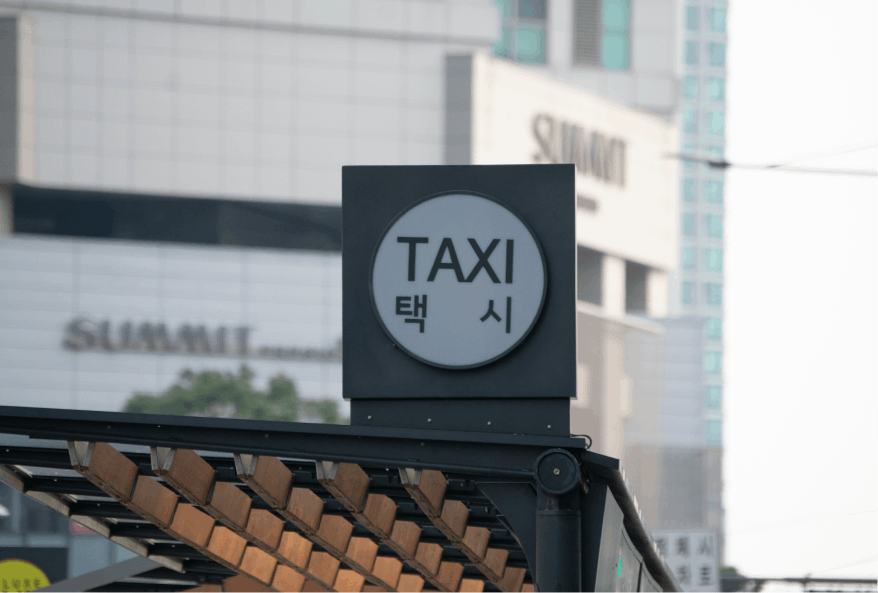
- Regular taxis: the cheapest and easiest to flag down. They are mainly orange or silver and sometimes white. They’ll charge more at night than in the day
- Deluxe taxis: Larger and more luxurious. You’ll spot these at major hotels and tourist destinations. They’re black with gold stripes and are slightly more expensive, but don’t add a surcharge at night.
- International taxis: Ideal for tourists. They are black or orange and have “international” written on the side. The drivers will speak English, but they will cost you a little more than regular taxis.
Uber doesn’t work in Korea. You’ll also need a Korean number to use the local equivalent apps. If you’re here for a few days, hailing cabs on the street is fine.
Insider tip:
If you get in a regular taxi don’t expect the driver to speak English. Always have your destination address written down to avoid any confusion with the driver.
Local travel apps
With free Wi-Fi on buses, the metro and sometimes in cabs, your smartphone is the perfect travel companion in Seoul. It actually allows you to be a lot more spontaneous on the go as you make your way through a place you haven’t been to before.
To scoot around the city with ease, download one of the many handy travel apps.
KakaoMap is ideal. It’s available in English and can map out any journey across the city, with real-time updates. You’ll soon be a Seoul travel pro.

Now you know how to get around the city, discover the best spots to get your street food fix, where to stay and where to shop for K-Beauty essentials.
Thinking of travelling to Seoul? Skyscanner can help you find the best flights, hotels and car hire deals for your next trip.


