
In partnership with Grab
Beautiful beaches, wonderful waves, dense jungle. Bali is a paradise for nature lovers and a haven for outdoors enthusiasts.
Exploring the natural side of Bali is the perfect tonic to boost your wellbeing. We’re talking jungle hikes, cycling tours and treks up volcanoes for an unforgettable. Let’s check out the best outdoor activities in Bali.
And for when you need a lift to get to started on these outdoor Bali adventures, try Grab.

When to go to Bali?
The dry season (April to September) is prime time for exploring Bali — clear skies, calm seas, and zero weather-related headaches. Underwater visibility peaks between June and August, making it the sweet spot for diving and snorkelling.
That said, the rainy season (October to March) shouldn't put you off. Showers tend to be brief, and there's still plenty of time each day to hike, cycle or get in the water. With Grab available island-wide, you can pivot quickly between spots when the weather turns — reliable rides, upfront fares, and cashless payment so a passing shower never derails your plans. Just make sure you download the Grab app before your trip so you can link your domestic card for transactions.
You’ll also enjoy fewer crowds and lower prices outside the holiday peak around Christmas and New Year.
Snorkelling in Bali
Leave the west coast to the surfers and party animals and head to Bali’s less-visited east coast or the islands off the southeast coast.
There’s kid-friendly snorkelling around the resorts of Sanur and Nusa Dua. But the best sites around here are the offshore islands of Nusa Penida and Nusa Lembongan. It’s about an hour’s boat trip east of Sanur.
Don’t miss snorkelling with manta rays at Manta Point off Nusa Penida. Mola mola are also frequently spotted. There’s a reason these islands are regarded as the dive capitals of South Bali. Any tour operator from Kuta to Ubud can get you here with a full or half-day dive trip.
Expect to see sharks, turtles, rays and plenty of schooling fish.
What about scuba diving in Bali?
You’ll find dive resorts and dive outfits around all the main east-coast sites. They’ll often provide transport if you’re staying on the west coast. And if your dive shop doesn’t offer transfers, Grab is a reliable way to get to early-morning boat departures from Sanur or Padang Bai without the stress of haggling at dawn. Pemuteran is an incredible base for scuba diving in Menjangan Island.
They all offer PADI or SSI dive courses, Discover Scuba dives and fun dives for certified divers. Expect to pay around $140 for two dives, including equipment. Snorkelling trips cost from $60 for two hours, depending on the location.
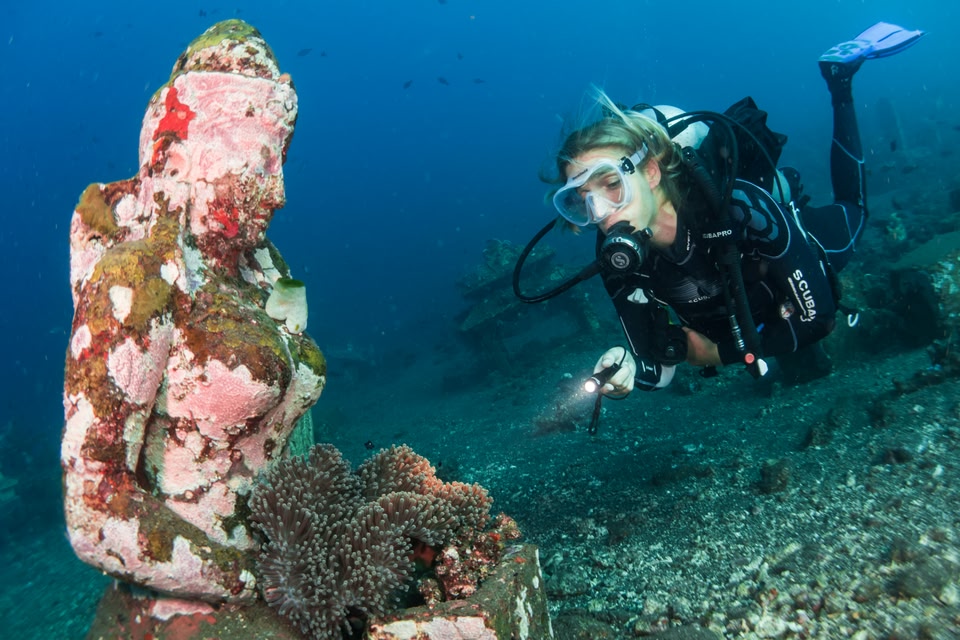
No dive trip to Bali is complete without visiting the USAT Liberty, one of the most remarkable wreck dives in Southeast Asia. The American cargo ship was torpedoed during WWII and now rests just 40m off the shore at Tulamben on Bali's east coast, making it one of the most accessible wrecks in the world.
Snorkellers can explore the stern in less than 5m of water, while scuba divers can drop beyond 20m into the hull. Decades underwater have transformed the Liberty into a thriving artificial reef, blanketed in coral and teeming with marine life.
Cycling in Bali
Bali is an amazing cycling destination. We’re not talking about the busy beach strip around Kuta and Seminyak, where the traffic is too congested and the streets too narrow. Instead head out in the countryside, among the villages, Hindu temples, and rice fields. You’ll get a true taste of Balinese life.
Ride past verdant rice paddies in fifty shades of green on almost traffic-free roads. With a tropical breeze blowing, it’s a magical experience.
You can rent good quality bikes from shops in popular beach resorts, Ubud and other mountain biking centres. And if you want the experience without the pedal pounding effort, many cycling tour operators have electric bikes.
Or, for a fully immersive experience, you can join a guided cycling tour which will lead you to the best views or trails and includes lunch.
What is considered one of the best places to cycle in Bali?
The area around Ubud is a favourite cycling destination in Bali. Traffic can be heavy around popular sights like temples and the Ceking rice terraces.
Away from tourist stops you’ll ride through local villages, alongside rivers and past rice fields. Many shops in Ubud rent out mountain bikes for around $25 a day and tour companies also guided day tours.
We love the Jatiluwih rice terraces in central Bali. Perfect rural cycling with less traffic.
A popular trip is the downhill ride in the central mountains starting from Kintamani, just west of the active volcano Mt Batur. Tour operators will pick you up, take you to Kintamani and pedal back via villages and farms. It’s downhill all the way!

Surfing in Bali
Bali is one of the world's great surfing destinations — and it has been for decades. From mellow beach breaks perfect for beginners to heavy reef breaks that will test even experienced surfers, the island delivers waves for every level.
The action is concentrated on the southwest coast, where the Indian Ocean swells roll in consistently from April to October. Kuta and Legian are the classic learner beaches, with surf schools lining the shore and instructors ready to get first-timers standing within a lesson or two. Expect to pay around $35–$50 for a two-hour beginner lesson including board hire.
Seminyak and Canggu attract intermediate surfers chasing longer rides and a livelier beach scene. For experienced surfers, Uluwatu on the Bukit Peninsula is the jewel in the crown — a world-class left-hander breaking over a reef, best surfed at mid to high tide.
Other standout spots include Padang Padang (famously featured in Eat Pray Love) and Bingin, both tucked below clifftops on the Bukit Peninsula.
Volunteer with sea turtles
Sea turtles nest on Bali’s beaches from May to September. These are mainly green turtles, hawksbill, and leatherback species.
The Bali Sea Turtle Society, based in Kuta, works tirelessly on turtle conservation in Bali. They collaborate with the local Balinese community to protect turtle nests and raise awareness about turtle conservation.
Visitors can help with beach clean-ups and possibly attend turtle releases. What a way to give back to this wonderful place.

Hiking in Bali
Like cycling, the best hiking in Bali is in the countryside and highlands, especially around Ubud.
Set out on your own with a local map and explore the backroads, villages, rice fields and temples. Or join an organised trek with one of the many tour companies.
Other good hiking destinations include the Lake Bratan area. Base yourself in Bedugal or Munduk and walk trails past coffee plantations, waterfalls, and the twin lakes Tamblingan and Buyan. You can do this with or without a guide.
Can you hike volcanoes in Bali?
Yes! This is one for the serious trekkers amongst you. Both Mt Batur and Mt Agung can be hiked. These are strenuous guided treks which usually reach the summit for a spectacular sunrise over Bali.
Trekking agencies around Bali can organise the climb but they must use local guides. It takes about two hours each way to summit Mt Batur. The more challenging Mt Agung is four to six hours each way and is often closed to tourists, so check ahead.
Head to Taman Nasional Bali Barat (West Bali National Park) in Bali’s far west. It’s a remote and uncrowded national park where you can hike with a guide in search of local wildlife.
Want more Bali travel tips? Start with our guides to the best surfing beaches in Bali and the best beaches in Bali overall, then dive deeper with our guide to where to dive in Bali. When you're ready to book, our picks for the best resorts in Bali have you covered — or start from the top with our complete guide to visiting Bali.


