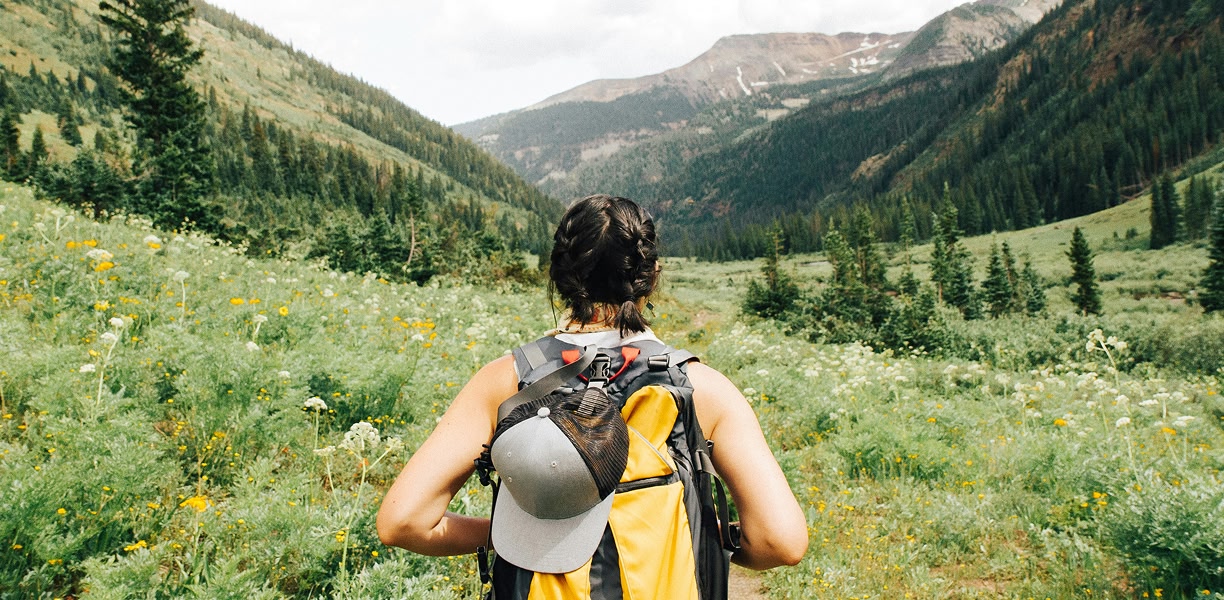
More than ever, Australian travellers are craving a taste of the outdoors. Escape the office and venture out for a few days into the wild with these top multi-day hikes around the world.
Australians are heading uphill. Nearly three in four travellers are considering or planning a mountain escape for summer or autumn this year, and it's not just the ski crowd. Many of us are after the quiet, the remote scenery and the cleaner, cooler air.
If a proper long walk is on your list, here are ten of the world's best treks, each at least three days and spread right across the globe. No matter if you're after an adventurous expedition or a first-timer-friendly stroll, there's a multi-day trek out there for you.

1. The Overland Track, Tasmania
Hikers wanting a wildeness experience at home
Australia's premier alpine walk runs through the heart of Cradle Mountain–Lake St Clair National Park, part of the Tasmanian Wilderness World Heritage Area. From Cradle Mountain to Lake St Clair you'll cross glacial valleys, ancient eucalypt forests, buttongrass moorlands and alpine meadows, with side trips to Mount Ossa (Tasmania's highest peak) and the Pine Valley for anyone with the legs. During the regulated season you'll need a permit and you must walk north to south. A daily cap of just 60 walkers keeps the wilderness feeling remote. The 2026 booking-season permit is around $312 for adults, and summer and Easter dates go months ahead, so plan early.

2. Milford Track, New Zealand
Those who want to chase some of New Zealand's iconic sights
A poet called it "the finest walk in the world" back in 1908, and the Milford Track has been living up to the billing ever since. The whole thing is bracketed by water: you start with a boat across Lake Te Anau and finish with one across Milford Sound/Piopiotahi, with no roads, resupply or phone signal in between. In the middle, the trail climbs the emerald Clinton Valley through deep beech rainforest, all moss-draped trunks and clear meandering river, before hauling up to Mackinnon Pass at 1,154m, where the forest falls away and glacier-carved valleys open up in every direction. The descent runs past Sutherland Falls, which drops 580m in three leaps and ranks among the tallest waterfalls in the country, though it's really the sheer number of cascades threading the route that stays with you. Keep an eye out for kea, the cheeky alpine parrots, around the pass. Booking is the hard part. Spots for a whole season open each May, and summer dates have sold out in as little as 40 minutes. Fiordland is one of the wettest places going, so a proper rain jacket isn't optional.

3. Salkantay Trail, Peru
Best for hikers who want a Machu Picchu finish without the Inca Trail's permit scramble
The best-known way to reach Machu Picchu on foot is the Inca Trail, but its permits are capped and sell out months ahead. The Salkantay Trek is the answer for many, and plenty of walkers reckon it's the better trip. It swaps ruins for raw mountain drama, skirting the foot of the snow-capped Salkantay peak (6,271m) and climbing to the Salkantay Pass at 4,630m before dropping into humid cloud forest thick with orchids and waterfalls. Along the way you'll pass the glacial turquoise of Humantay Lake and walk through coffee-growing country, with a first distant glimpse of the citadel from the Llactapata ruins before the main event on the final day. There's no permit lottery here, and villages along the route mean you can walk light and sleep in lodges rather than lugging a tent. The altitude is the catch, so give yourself a couple of days in Cusco to adjust before you set off.

4. Tour du Mont Blanc, France, Italy and Switzerland
Best for: walkers who want alpine views, three cultures and a comfy refuge bed each night
One loop, three countries, and some of the finest alpine scenery in Europe. The Tour du Mont Blanc circles the Mont Blanc massif, and the scenery changes each time you cross into the next country. Expect hanging glaciers and jagged peaks above Chamonix in France, a pasta-and-cappuccino lunch stop in Italian Courmayeur, then the cowbell valleys and flower-filled hamlets of Switzerland's Val Ferret. High passes like the Col de la Seigne and Grand Col Ferret link it all, with ibex and marmots for company on the climbs. Most trekkers take on the full circuit, but shorter highlights itineraries cover the best of it in a few days.

5. Gokyo Lakes, Nepal
Best for trekkers who want the Everest region minus the Base Camp queues
Everest Base Camp is the famous one, but you can't actually see Everest from Base Camp, and the trail there can feel like peak-hour foot traffic. The Gokyo Lakes trek is the quieter, arguably prettier answer. It shares the classic route only as far as Namche Bazaar before branching west into its own valley, and the reward is the dawn climb up Gokyo Ri (5,357m), which serves up a full 360-degree sweep of Everest, Lhotse, Makalu and Cho Oyu, a wider panorama than the standard viewpoint. The name comes from a chain of six turquoise glacial lakes against the brown-and-grey moraine, strung alongside the Ngozumpa Glacier, the longest in Nepal. You'll still walk through Sherpa villages, cross suspension bridges and take that iconic flight into Lukla, but with a fraction of the crowds. The altitude is the challenge rather than the terrain, so build in the acclimatisation days and a couple of buffer days for weather-dependent mountain flights.

6. W Trek, Torres del Paine, Chile
Best for hikers who want raw, dramatic scenery without carrying camping gear
Patagonia at full volume. The W Trek traces a rough "W" across Torres del Paine National Park, and each of its three arms delivers a different showpiece. One climbs the Ascencio Valley through lenga forest to a glacial lagoon at the base of the towers, a steep haul best timed for sunrise, when first light sets the three granite spires glowing gold. The central arm pushes up the French Valley into a natural amphitheatre ringed by the Paine Massif. The last runs alongside Lago Grey, its milky water flecked with icebergs. The clever part is that you can walk it without a tent or stove, staying and eating in a mix of refugios and serviced campsites along the way, and the refugio food is better than anything you'd make on a backpacking trip. Days run 15 to 22km, so it's a proper walk rather than a stroll, and the notorious Patagonian weather can serve up four seasons in a single afternoon. Beds go fast, so book ahead.

7. Kilimanjaro, Tanzania
Best for aspiring summiteers who want to stand on the roof of a continent
The "Roof of Africa" is the tallest free-standing mountain in the world at 5,895m, and reaching Uhuru Peak takes solid fitness and careful acclimatisation rather than any technical mountaineering. The scenic Machame route is the most popular way up, climbing through five climate zones from rainforest to arctic summit. It's a bit like walking from the equator to the poles in under a week. Going for the longer itinerary pays off, pushing summit success rates well above 90% thanks to a "climb high, sleep low" profile. A licensed guide is required, and plenty of trekkers tack on a few days in Zanzibar afterwards.

8. Kumano Kodo, Japan
Best for cultural travellers who want history among the wilderness
If you'd rather your walk be easy on the body and rich for the soul, the Kumano Kodo is one of only two pilgrimage routes in the world with UNESCO World Heritage status. (The other is Spain's Camino de Santiago, and walk both and you can call yourself a "dual pilgrim.") The popular Nakahechi route runs through the forested Kii Peninsula, linking the three sacred Kumano Grand Shrines. You can get lost in thought among the mossy stone paths, towering cedar forests, and then spend the night at a traditional inn (soaking the day away in a hot onsen). Many signs are in English, and luggage-forwarding services mean you can also walk with a daypack. Solo travellers find it one of the most accesible hikes for them. Rooms are limited, so book six months or more ahead for high season.

9. Laguna de los Tres and Mount Fitz Roy, Argentina
Best for independent walkers who'd rather base in a village than carry a tent
On the Argentine side of Patagonia sits one of the Southern Hemisphere's most rewarding routes, and one that keeps climbing the AllTrails rankings. From the trekking village of El Chaltén you can string together several days of walks, saving the best for the hike to Laguna de los Tres beneath the jagged spires of Mount Fitz Roy. El Chaltén's great trick is flexibility. You can hike hut-free and hotel-based, taking a different trail each day and coming back to a warm bed and a good steak each night. The final climb to the laguna is a steep, lung-busting slog, and the glacial lake mirroring those towers at the top is worth every step.
10. Kepler Track, New Zealand
Best for trekkers wanting a logistically simple alpine loop
Our second Kiwi pick is Fiordland's youngest Great Walk, and one of its most popular thanks to how close it sits to Te Anau. Where many older trails grew out of pioneering or Māori routes, the Kepler was built simply for the walking, and it delivers: the loop climbs from beech-forested lakeshores up to a tussock ridgeline above the bushline, then drops through a limestone gorge before following the shore back to the start. Because it's a circuit that begins and ends near town, it's one of the easiest Fiordland walks to organise, with no ferry crossings or transport puzzles at either end. You'll stay in Department of Conservation huts, which fill quickly once the season opens, so reserve early.
Keen to plan your own adventure? Multi-day treks are part of a bigger shift towards higher ground, and you can dig into the numbers behind the mountain travel trend or browse where Australians are heading this year for more inspiration. If the Kumano Kodo has you dreaming of Japan, don't miss our guides to Mount Fuji and beyond and the unique experiences you can have in Japan. And whenever you're ready to book, use Whole Month search to find the cheapest day to fly.


