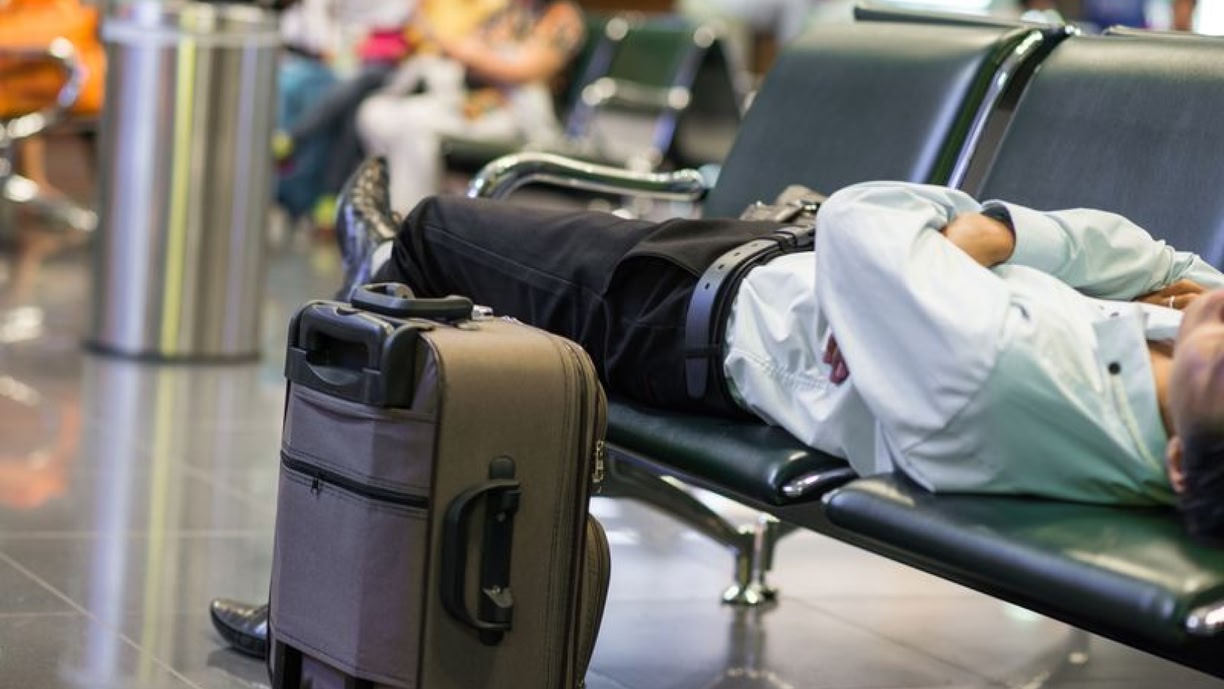
Whether you're stuck with a long layover, a cancelled flight or an overnight delay, here's how to sleep comfortably in an airport.
At some point, just about every regular traveller will find themselves needing to catch up on sleep in an airport. Flight cancellations, weather conditions, long layovers and unexpected delays can all leave you spending more time than you'd like in a terminal. The good news is that airports have come a long way in their rest options — and knowing your options before you travel makes all the difference. Here's the best way to sleep in an airport, from free quiet zones to paid sleeping pods.
Are you allowed to sleep in airports?
For most airports, staff are well used to seeing passengers spend the night or catch a few hours of shut-eye between flights. While it's not always actively encouraged, sleeping in an airport is generally allowed, provided you're not disturbing other travellers or blocking walkways.
That said, some airports have tightened their rules. Many airports ban 'bedding down' and setting up a makeshift bed or taking over multiple seats. If a staff member asks you to move on, stay polite, have your boarding pass ready, and note the nearest airport hotel just in case.
Domestic airports and smaller terminals with limited opening hours are more likely to be restrictive. International airports, by contrast, tend to be better equipped — with free recliner zones, transit hotels and sleeping pods available around the clock.
What to pack for sleeping at the airport
Comfort is everything when you're trying to rest in a terminal. Pack these essentials:
Soft, stretchy clothing you can layer — avoid anything with bulky zippers or seams that dig in while you sleep
A small blanket or sarong (airports are notorious for blasting the air conditioning)
An inflatable travel pillow
An eye mask
Earplugs
A fully charged phone with your alarm set to the local time zone
A toiletry kit with deodorant, a toothbrush and toothpaste so you can freshen up before boarding
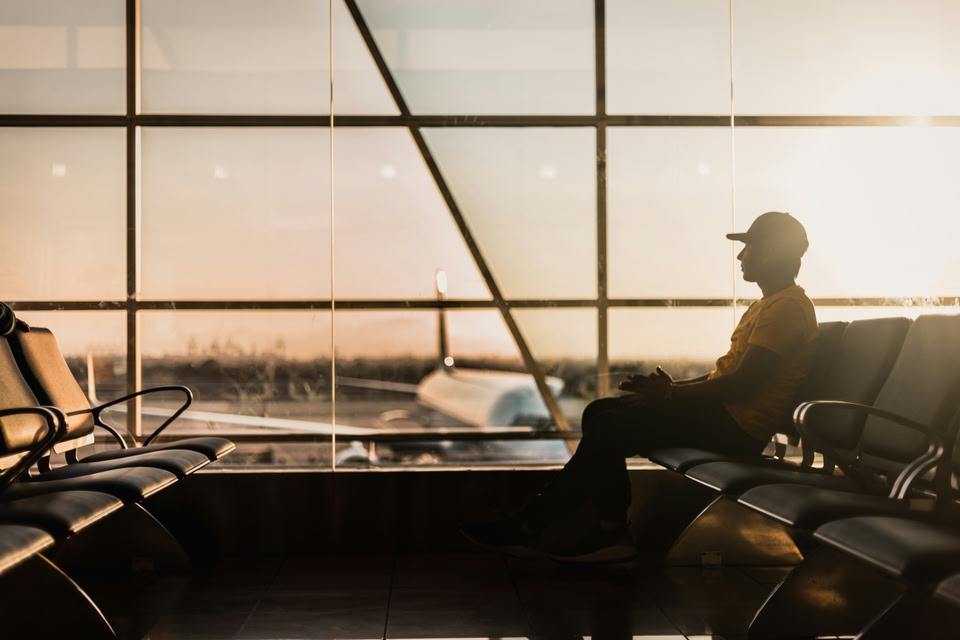
Tips for sleeping in airports
Research the airport before you arrive
Large international airports can be overwhelming when you're exhausted. Before you travel, check whether your airport has designated rest zones, quiet rooms or sleeping pods. Search the airport's official website for terms like "nap zone," "relax zone," or "quiet room" — these areas are often listed under passenger facilities or transit services. Download the terminal map so you can head straight to the right spot when you land. Some airports also have designated "quiet gates" where they do not make boarding announcements.
Look out for: quiet zones with reclined or lay-flat seats, gender-specific rest rooms, airport hotels that rent by the hour, and sleeping pods.
Move to the international terminal if needed
If your layover falls in a domestic terminal that closes overnight, move to the international terminal. These are almost always open 24 hours, particularly in larger airports, and are far more likely to have the facilities you need. You won't be able to go airside if you don't have a ticket, but the check-in area may still be open.
Find a quiet, comfortable spot
If there are no designated sleep areas, find a gate that has no upcoming departures. Check the departures board and position yourself somewhere away from bathrooms, food courts, high-traffic corridors and boarding announcement speakers. Look for rows of seats without armrests, or even a clean patch of floor if that's your best option.
Keep your valuables secure: store what you can in a locker, zip everything else into your bag, loop the strap around your arm or leg, and keep your passport and wallet on your person.
Consider an airport lounge for sleeping overnight
Airport lounges have evolved well beyond a free drink and a quiet seat. Many now offer recliner chairs, private rest areas and even sleeping pods — making them one of the best places to sleep in airports for travellers who want a step up from a terminal bench.
Priority Pass, which many Australians access through premium credit cards, now includes sleep pods and nap rooms at select airports worldwide with some offering up to four hours of access at no extra cost beyond the membership. Travel credit cards like the American Express Platinum provide unlimited Priority Pass visits, while other Australian credit cards offer a set number of complimentary visits per year. It's worth checking what's included with your card before you fly.
If you don't have a lounge membership, many airports also offer pay-per-use access.
Take advantage of airport sleeping pods
Sleeping pods have become a genuine alternative to airport hotels, particularly for layovers of four to eight hours. Providers like GoSleep and Sleepbox operate in major hubs and international airports, typically offering a flat or reclining surface, power outlets and a small work area. They're more affordable than a hotel room and let you stay in the terminal.
Some of the best airports with sleeping pods include: Singapore Changi (SIN), which has free Snooze Lounge areas with reclining chairs across all terminals; Incheon International (ICN) in South Korea, with around 60 free NapZone chairs across both terminals; as well as Abu Dhabi (AUH), Amsterdam Schiphol (AMS), Dubai (DXB), Helsinki (HEL), Munich (MUC) and Istanbul (IST).
Check into an airport transit hotel
Many major airports offer transit hotels, landside or airside, that you can access without going through customs. These are often the most comfortable option for longer layovers, and booking ahead online will generally get you a significantly better rate than walking up on the day.


